
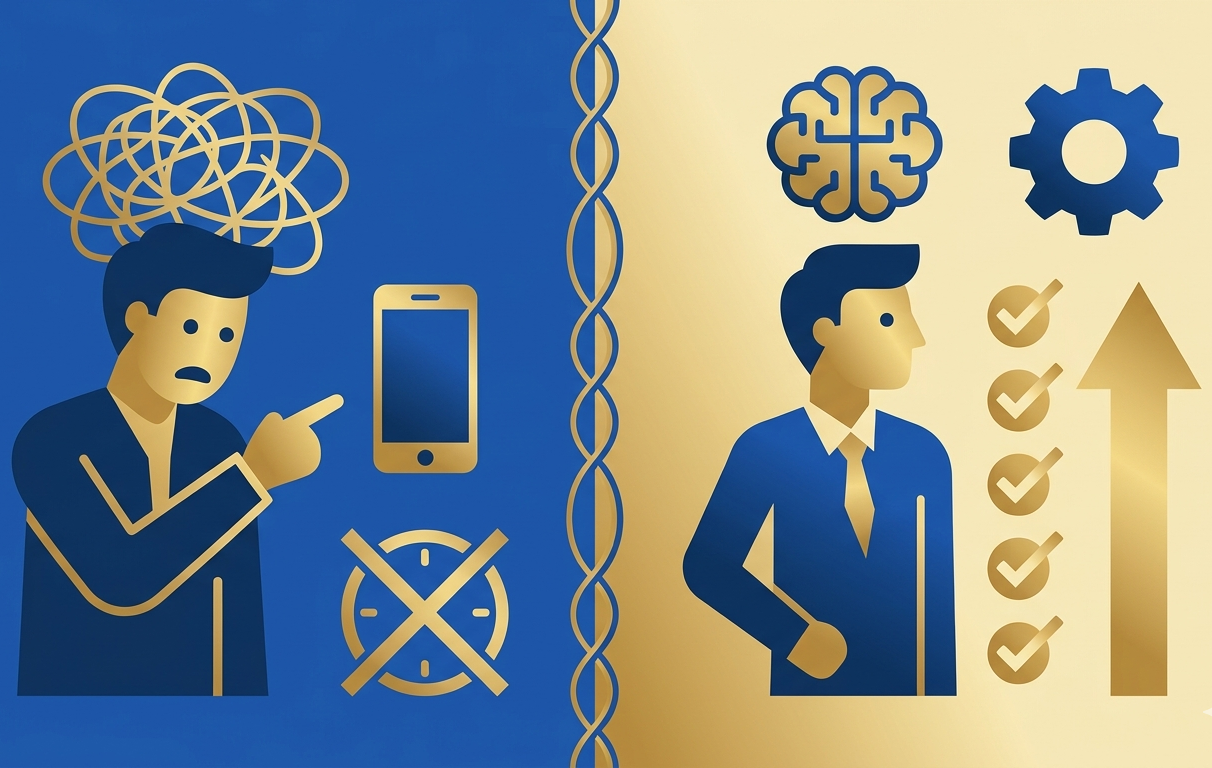
We’ve all been there: you sit down to tackle a major project, and suddenly, the kitchen tiles need deep-cleaning, or you’ve spent forty-five minutes scrolling through a thread about the history of salt.
Procrastination isn’t about being “lazy.” Usually, it’s an emotional response to a task that feels overwhelming, boring, or scary. I used to think I worked “better under pressure,” but in reality, I was just addicted to the stress-induced adrenaline that comes with a deadline. Learning to focus isn’t about working harder; it’s about managing your brain better.
1. Understand the “Why” Behind the Stall
Before you can fix your focus, you have to realize that procrastination is often mood regulation. We avoid the task because the task makes us feel anxious, bored, or incompetent.
- The Science: When we face a task we dislike, the amygdala (the brain’s “threat detector”) kicks in, triggering a “flight” response—usually toward TikTok or the fridge.
- The Fix: Acknowledge the feeling. Say, “I’m feeling overwhelmed by this,” and then commit to just five minutes. Usually, the hardest part is the friction of starting.
2. Use the “Pomodoro” with a Personal Twist
The Pomodoro Technique is a classic for a reason: you work for 25 minutes and break for 5.
- My Personal Tip: During that 5-minute break, get away from screens. If you spend your break on your phone, your brain doesn’t actually reset; it just switches one type of digital stimulation for another. Go grab a glass of water or stretch.
- Resource: Read more about the science of breaks and productivity from the Harvard Business Review.
3. Eat the “Frog” Early
Mark Twain once said that if you eat a live frog first thing in the morning, nothing worse will happen to you the rest of the day.
- The Strategy: Identify the one task you are dreading the most. Do it first.
- Why it works: Our willpower is a finite resource. It’s highest in the morning. If you save the “scary” task for 4:00 PM, your brain will have a million excuses to push it to tomorrow.
4. Optimize Your “Dopamine Environment”
Your environment is either a cockpit for focus or a playground for distraction. If your phone is sitting next to you, even face down, your brain is using energy to not check it.
- The Hack: Put your phone in a completely different room.
- The Digital Cleanse: Use browser extensions like StayFocusd or Freedom to block distracting websites during work hours. According to research on digital distractions, it can take an average of 23 minutes to get back into “the zone” after a single interruption.
5. Practice “Productive Procrastination”
If you absolutely cannot start the “Big Task,” don’t just scroll social media. Switch to a smaller, useful task.
- The Strategy: Clear your inbox, organize your files, or update your calendar.
- The Benefit: This builds “completion momentum.” Once you check off three small things, your brain feels successful and is more likely to tackle the big “Frog.”
6. The Power of “Single-Tasking”
Multitasking is a lie we tell ourselves to feel busy. In reality, the brain is just “context switching” rapidly, which lowers your IQ by about 10 points in the moment.
- The Fix: Work on one tab only. If you are writing, close your email and your research tabs once you have what you need. Focusing on one thing at a time actually gets the job done 40% faster.
Important Points for Sharp Focus
- Digital Hygiene: Your phone is a casino designed to steal your attention. Use “Do Not Disturb” as your default setting.
- The 2-Minute Rule: If a task takes less than two minutes (like answering a quick email), do it immediately. Don’t let it take up space on your list.
- Environment Matters: If your desk is a mess, your mind will feel cluttered. Clear everything except what you need for the current task.
Practical Tips You Can Use Today
- The “Done List”: Instead of just a “To-Do” list, keep a “Done” list. Writing down what you’ve actually accomplished provides a dopamine hit that fuels further focus.
- Browser Cleanup: Close every tab that isn’t related to your current task. If you’re worried about losing a page, use a bookmark tool like Pocket.
- The 10-Minute Tidy: Before you start work, spend 10 minutes cleaning your physical workspace. It signals to your brain that “Work Mode” has begun.
Reliable Sources for Further Reading
- Deep Work: For a masterclass on focus, check out the principles of Deep Work by Cal Newport.
- Procrastination Research: The American Psychological Association offers great insights into why we delay tasks and how to break the cycle.
Focus is like a muscle. Some days it feels weak, and other days it feels strong. The key is to stop waiting for “motivation” to strike and instead rely on a solid system.
What’s the one task you’ve been putting off? Try the 5-minute rule right now and see what happens!
Leave a Reply