
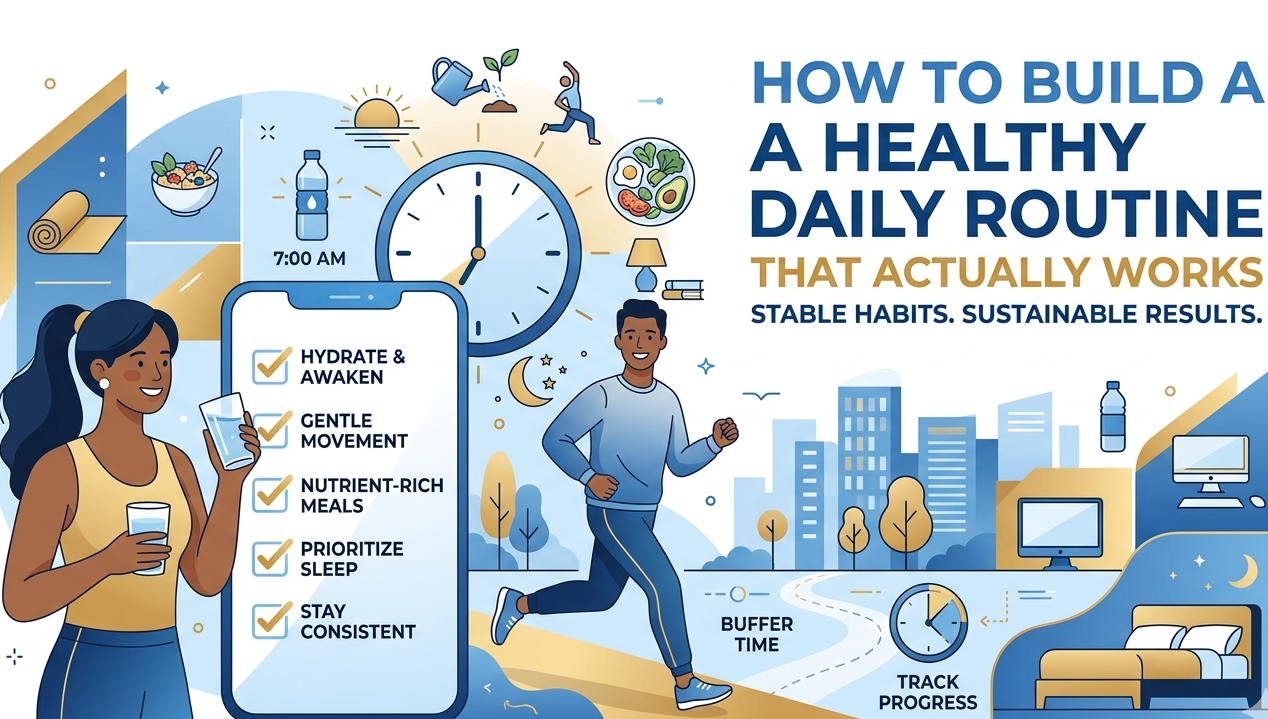
In a fast-paced world, building a healthy routine can feel like a daunting task, especially if your attempts at changing behavior fall apart after a few days. We’ve all been there—trying to wake up at 5:00 AM, hit the gym, and eat perfectly, only to burn out by Wednesday.
The secret to a routine that actually sticks doesn’t rely on sheer willpower. Instead, it relies on the psychology of habit formation and behavioral design. Let’s look at how we can make these positive changes feel completely effortless in your daily life.
The Science of Habit Formation
To build a sustainable routine, it helps to understand how the brain adopts new behaviors:
- The Habit Loop: Habits emerge through a continuous loop consisting of a cue, a routine, and a reward as detailed by the British Journal of General Practice. Cues can be time-based, location-based, or sequential.
- Automaticity: When a simple behavior is repeated in a consistent context, the brain forms neural pathways in the basal ganglia, making the action feel automatic and effortless over time.
- Consistency over Duration: Research shows it takes anywhere from 18 to 254 days (with an average of about 66 days) for a habit to achieve automaticity. Focusing on a small, manageable change ensures you stay consistent without burning out.
7 Steps to Build a Sustainable Routine
1. Start Small Using the “Two-Minute Rule”
Don’t try to overhaul your entire life overnight. Attempting too many changes at once depletes motivation. As outlined by James Clear, the two-minute rule suggests beginning with a version of the habit that takes less than two minutes to execute.
- Practical Tip: Instead of committing to a 30-minute workout, tell yourself, “I will put on my running shoes and step outside.”
2. Anchor to Existing Routines (Habit Stacking)
It is much easier to attach a new behavior to an established cue than to create an entirely new one out of thin air.
- Practical Tip: Say, “After I pour my morning cup of coffee, I will drink one glass of water” or “After I brush my teeth, I will do two minutes of stretching.”
3. Optimize Your Physical Environment
Set your environment up to make good behaviors easy and bad behaviors difficult.
- Practical Tip: Prepare your workout clothes the night before, place fresh water on your desk, or leave healthy breakfast ingredients (like oats or fruit) right on the kitchen counter.
4. Design for Energy, Not Just Time
A routine isn’t just about managing the hours in your day; it’s about managing your physical and mental energy.
- Practical Tip: Identify your peak productivity hours (whether you are an early bird or a night owl) and schedule your most demanding, high-focus tasks during those times.
5. Prioritize Foundational Health Habits
Incorporate the core pillars of physical and mental well-being into your daily structure:
- Nutrition & Hydration: Eat meals on a regular schedule and make sure your morning includes protein, healthy fats, and fiber.
- Movement: The Centers for Disease Control and Prevention (CDC) recommends at least 150 minutes of moderate-intensity activity per week. Light morning activity boosts your mood and alertness.
- Sleep: Consistency in your sleep-wake cycle keeps your circadian rhythm functioning optimally. Maintaining good sleep hygiene is recommended by Harvard Health Publishing.
6. Build in Buffer Time
Life happens. Meetings run long, traffic is unpredictable, and sometimes you just feel tired.
- Practical Tip: Schedule 15 to 30 minutes of “white space” or transition time between major blocks of your day so you don’t feel overwhelmed if you fall slightly behind.
7. Track Your Progress
Using a simple tick-sheet or an app to track your daily routine during the first few weeks can help anchor your habits until they become second nature.
Example Healthy Daily Schedule
| Time | Activity | Purpose |
| 7:00 AM | Hydrate & Awaken | Drink a full glass of water and expose yourself to natural light to regulate your circadian rhythm. |
| 7:15 AM | Gentle Movement | Engage in 5–10 minutes of light stretching or a brisk walk to boost blood flow. |
| 7:45 AM | Nutritious Breakfast | Consume a balanced meal rich in protein and fiber to jump-start your metabolism. |
| 12:30 PM | Lunch & Short Break | Step away from screens to eat and rest, which prevents mid-afternoon burnout. |
| 6:30 PM | Digital Sunset | Disconnect from screens to prepare your mind for restful sleep. |
References & Further Reading
Centers for Disease Control and Prevention. Benefits of Physical Activity. cdc.gov
Gardner, B., Lally, P., & Wardle, J. (2012). Making health habitual: the psychology of ‘habit-formation’ and general practice. British Journal of General Practice, 62(605), 664–666. DOI: 10.3399/bjgp12x659466
James Clear. How to Stop Procrastinating by Using the “2-Minute Rule”. jamesclear.com
Harvard Health Publishing. Sleep hygiene: Simple practices for better rest. health.harvard.edu
Leave a Reply