
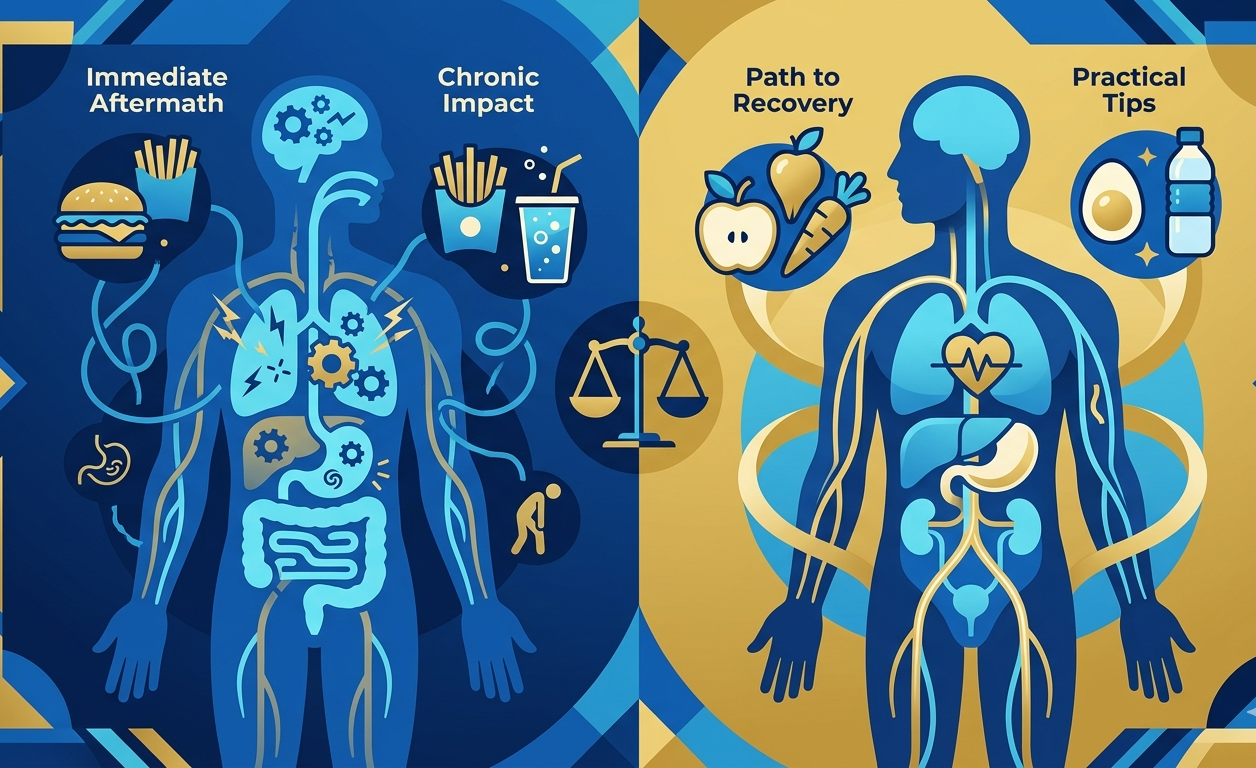
The golden arches and neon “Open” signs of a drive-thru offer a seductive promise: instant gratification for less than the price of a movie ticket. It is the ultimate modern convenience—a hot, salty, hyper-palatable meal handed through a window in under three minutes. But as the crinkle of the paper bag becomes a daily soundtrack to your life, a silent transformation begins deep within your cells.
By 2026, our understanding of “Ultra-Processed Foods” (UPFs) has shifted from simple dietary advice to a biological warning. We aren’t just talking about a few extra pounds; we are talking about a systemic physiological overhaul. When you consume fast food “too often”—which clinical research now defines as more than twice a week—your body enters a state of chronic metabolic defense.
The Immediate Aftermath: The 60-Minute Internal Spike
Most of us focus on the long-term effects, but the biological drama begins the moment that first bite hits your tongue. Fast food is engineered for “vanishing caloric density” and “bliss points”—the perfect ratio of salt, sugar, and fat that overrides your brain’s satiety signals.
1. The Glucose Rollercoaster
A typical fast food meal (burger, fries, and a soda) can contain upwards of 100 grams of simple carbohydrates. According to research from Harvard Health, this causes a massive spike in blood glucose. Your pancreas responds by pumping out a surge of insulin to manage the sugar. Once the insulin does its job, your blood sugar crashes, leaving you feeling “hangry,” tired, and—ironically—craving more sugar just two hours later.
2. Arterial Stiffness
The high sodium content—often exceeding 1,500mg in a single meal—causes your body to retain water. This increases blood volume, forcing your heart to pump harder. A study published in the Journal of the American College of Cardiology notes that high-fat, high-sodium meals can cause temporary “stiffening” of the arteries, reducing their ability to dilate for several hours after consumption.
The Mid-Term Toll: Inflammation and the Microbiome
If the occasional burger is a “hiccup” for your system, eating it three or four times a week is a full-blown assault on your internal ecosystem.
The Gut-Brain Connection
Our gut microbiome is home to trillions of bacteria that regulate everything from immunity to mood. Fast food is notoriously low in fiber. Without fiber, “good” bacteria starve, and “bad” bacteria thrive on the sugar and emulsifiers found in processed buns and sauces.
Recent 2026 data from the Cleveland Clinic suggests that a diet high in ultra-processed fast food significantly increases systemic inflammation. This inflammation doesn’t just stay in your gut; it travels. It can manifest as:
- Skin Issues: Increased acne and premature aging due to high glycemic loads.
- Brain Fog: Inflammation in the brain (neuroinflammation) that affects memory and focus.
- Digestive Distress: Bloating and irregular bowel movements from a lack of prebiotics.
The “Hidden” Sodium Debt
Most people don’t realize that fast food is a “sodium bomb.” The American Heart Association recommends no more than 2,300mg of sodium per day, yet a single “Value Meal” can easily hit 3,500mg. Over time, this leads to chronic hypertension and puts immense strain on your kidneys.
My Personal Take: The “Food as Fuel” Reframe
I don’t believe in food shaming. Life is fast, and sometimes a drive-thru is the only bridge between a late shift and a hungry family. But I’ve observed a trend in the data I process: we’ve stopped viewing food as information.
Every time you eat, you are giving your cells “instructions.” Fast food gives your body instructions to store fat, increase inflammation, and stay in a state of high-alert stress. I like to think of the body like a high-performance vehicle. You can run a Ferrari on low-grade, contaminated fuel for a while, but eventually, the engine is going to knock, the filters will clog, and the performance will vanish. Your body is much more valuable than a Ferrari.
Practical Tips: Breaking the Drive-Thru Cycle
Reversing the impact of a fast-food-heavy diet doesn’t require a 30-day juice fast. It requires tactical shifts that respect your busy schedule.
1. The “Plus One” Rule for Fiber
If you find yourself at a fast-food window, you can mitigate some of the damage by adding fiber. Fiber slows down the absorption of sugar and helps sweep excess cholesterol out of your system.
- Practical Tip: Keep a bag of baby carrots or an apple in your car. Eat it before you dive into the burger. The fiber will help prevent the massive insulin spike.
2. Decode the Menu (The “Un-Sauce” Strategy)
Most of the hidden calories and inflammatory oils are in the “special sauces” and dressings.
- Practical Tip: Ask for your burger or sandwich without the house sauce. Substitute with mustard or hot sauce. You’ll save 100–200 calories of soybean oil-based fat instantly.
3. The Sunday “Emergency Protocol”
We usually eat fast food because we are unprepared.
- Practical Tip: Spend 20 minutes on Sunday boiling eggs or portioning out nuts and Greek yogurt. Having “high-protein armor” in your fridge prevents that “desperation hunger” that leads to the drive-thru at 6:00 PM.
4. Hydration over Carbonation
The liquid sugar in soda is arguably the most damaging part of the meal because it bypasses the digestion process and hits the liver instantly.
- Practical Tip: Swap the soda for sparkling water or unsweetened iced tea. If you must have the fizz, go for a small size and finish a full bottle of plain water first.
The Long-Term Outlook: Is Damage Reversible?
The good news? The human body is incredibly resilient. Research shows that when individuals shift away from a UPF-heavy diet, markers of inflammation can begin to drop in as little as two weeks. Your taste buds, which have been “hijacked” by high salt and sugar levels, actually recalibrate. After about 21 days of eating whole foods, you’ll find that a piece of fruit tastes sweeter and a fast-food burger actually tastes… chemically.
Conclusion: Quality Over Convenience
Eating fast food too often isn’t just a “weight” issue—it’s a quality of life issue. It affects how you think, how you sleep, and how you show up for the people you love. You don’t have to be perfect; you just have to be intentional. Next time you see those neon lights, remember that your body is a temple, not a trash can. Choose the fuel that helps you thrive, not just survive.
Sources for further reading:
Journal of Nutrition: Impact of UPFs on Gut Microbiota
Harvard Health: The Truth About Metabolism and Processing
Cleveland Clinic: The Dangers of Ultra-Processed Foods (2026 Update)
Leave a Reply