
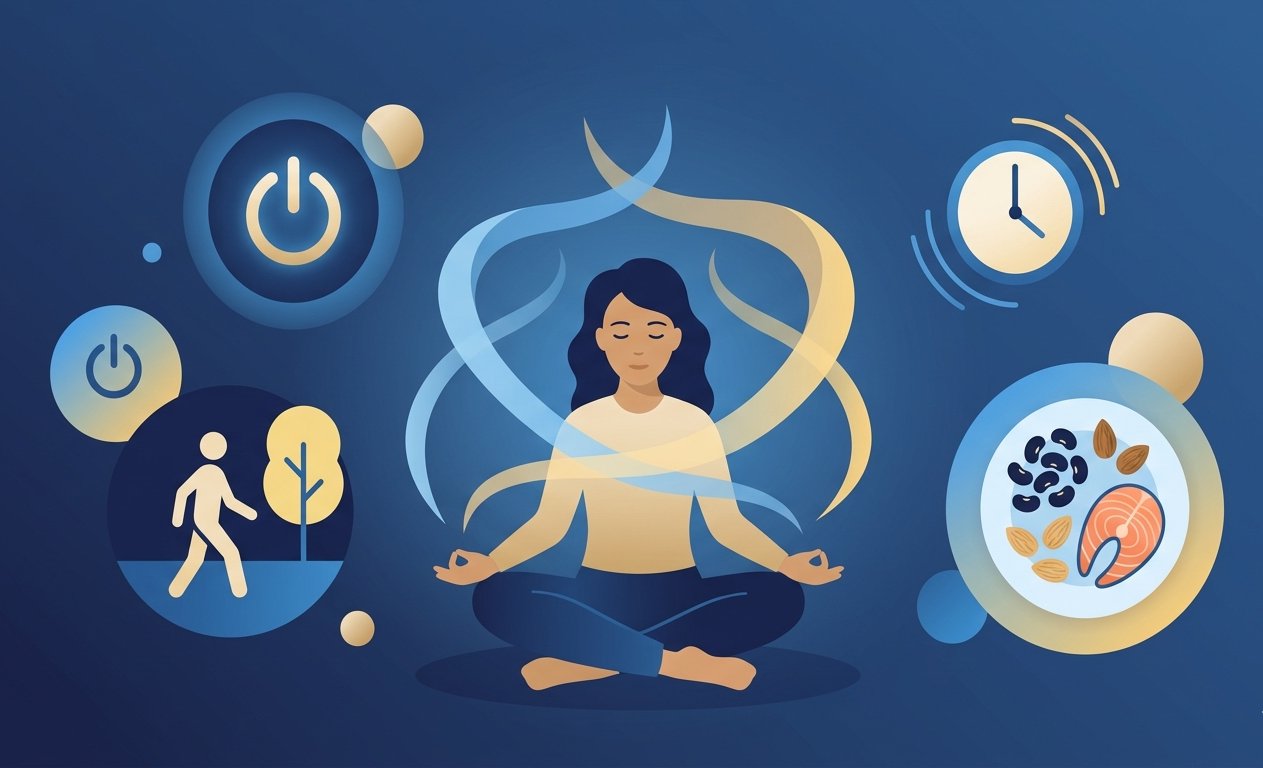
Picture this: It’s 8:00 AM. You have a coffee in one hand, a smartphone in the other, and a mental reel of “what-ifs” playing on a loop in your brain. Your heart rate is already slightly elevated, not because you’re exercising, but because you’re living in the 21st century. We often treat stress like a badge of honor—a sign that we are productive, needed, and “hustling.” But let’s be real: that “hustle” is slowly draining your battery to zero.
I used to think stress was just the price of admission for a successful life. I spent years ignoring the tight shoulders and the short temper until my body finally staged a coup. That’s when I realized that managing stress isn’t about a massive life overhaul or moving to a remote island. It’s about the small, intentional shifts we make in the margins of our day.
If you’re tired of feeling like a laptop with too many tabs open, here is a practical, science-backed guide to lowering your cortisol and reclaiming your headspace.
1. The “Micro-Break” Revolution
We’ve been conditioned to think we need a week-long vacation to reset. In reality, our nervous systems respond much better to micro-breaks. When you work for hours without stopping, your brain enters a state of “vigilance fatigue.”
Research suggests that even brief diversions from a task can dramatically improve your ability to focus for long periods.
- The 20-20-20 Rule: Every 20 minutes, look at something 20 feet away for 20 seconds. It sounds minor, but it signals to your brain that you aren’t under constant threat.
- The Physiological Sigh: This is a biological hack. Inhale deeply through your nose, take a second tiny inhale at the very top to fully inflate the lungs, and then exhale slowly through your mouth. Two or three of these can instantly lower your heart rate.
Personal Tip: I started setting a silent haptic alarm on my watch for every 90 minutes. When it buzzes, I stand up and stretch. I don’t check my phone—I just breathe. That 60-second “reset button” prevents the dreaded 4:00 PM brain fog.
2. Master the Art of “Single-Tasking”
We’ve been sold a lie that multitasking is a superpower. In reality, the human brain is remarkably bad at it. What we call multitasking is actually “task switching,” and it comes with a heavy cognitive tax.
When you try to write an email while listening to a podcast and cooking dinner, your brain stays in a state of high alert. This constant switching increases activity in the sympathetic nervous system (SNS) while lowering parasympathetic activity, making it harder for your body to relax (Becker et al., 2022).
Try this instead:
- The Pomodoro Technique: Work on one task for 25 minutes, then take a 5-minute break.
- Close the Tabs: If you aren’t using a browser tab, close it. Visual clutter equals mental clutter.
- Monotasking Meals: Eat your lunch without looking at a screen. Notice the flavor, the texture, and the smell. It’s a form of “stealth meditation.”
3. Optimize Your Digital Environment
In 2026, our phones are essentially stress-delivery devices. Between news alerts and social media notifications, we are constantly being pulled into other people’s emergencies or highlight reels. Digital detoxing has been shown to significantly improve academic performance, motivation, and psychological well-being by reducing “nomophobia”—the anxiety of being without your phone (Özbay, 2026).
- Audit Your Notifications: If it’s not from a real human being (like a text or call), you probably don’t need a buzz in your pocket for it. Turn off “likes,” “shares,” and news breaking alerts.
- The “Grey Scale” Trick: Go into your phone settings and turn the screen to grayscale. It makes the apps much less rewarding to look at, naturally reducing your screen time.
- Digital Sunset: Aim to put your phone away at least 45 minutes before bed. High cortisol levels later in the day can trigger insomnia, making it harder to recover from the day’s stressors.
4. Nutrition and the Gut-Brain Connection
What you eat directly impacts how you handle pressure. We often reach for sugar or caffeine when stressed, but these lead to crashes that leave us feeling more anxious. The bidirectional relationship between the brain and the gut microbiota (the BGM system) exerts substantial influence on mood regulation and cognitive processes (Merlo et al., 2024).
| Nutrient | Benefit | Found In |
| Magnesium | Relaxes muscles and regulates cortisol | Spinach, almonds, black beans |
| Omega-3s | Promotes neurotransmitter functioning | Salmon, walnuts, chia seeds |
| Complex Carbs | Stabilizes blood sugar levels | Oatmeal, sweet potatoes, quinoa |
The brain consumes roughly 20-25% of the body’s total energy (Merlo et al., 2024). Feeding it refined sugars causes blood sugar spikes that force the body to release more cortisol to compensate. Choosing a Mediterranean-style diet has been linked to lower overall cortisol levels.
5. Movement as Medicine
When people hear “exercise,” they often imagine grueling hour-long gym sessions. If that feels like another chore on your list, it will actually increase your stress. Instead, focus on joyful movement. Physical activity bumps up the production of your brain’s feel-good neurotransmitters, called endorphins.
- The 10-Minute Walk: Fresh air and a change of scenery work wonders.
- Tai Chi and Yoga: These exercises combine movement with mindfulness. Studies have shown that tai chi helps reduce stressful feelings while increasing positive emotions, especially in older adults.
- Dance it Out: Put on one high-energy song and move. It’s nearly impossible to feel existential dread while dancing to your favorite hit.
6. Align with Your Circadian Rhythm
Your body has a natural clock that dictates when cortisol should be high (morning) and low (night). When this rhythm is disrupted—common for night-shift workers—it leads to metabolic and cardiovascular issues (Andreadi et al., 2025).
To keep your rhythm steady:
- Get Morning Sunlight: Exposure to natural light shortly after waking helps set your internal clock.
- Strategic Napping: If you’re sleep-deprived, a 20-minute “power nap” can stabilize your rhythms without making you groggy (Andreadi et al., 2025).
- Consistency is Key: Try to go to bed and wake up at the same time every day, even on weekends.
Conclusion: Small Steps, Big Results
Stress management isn’t a destination you reach; it’s a practice you maintain. You don’t have to do all of these things at once. Pick one—maybe it’s the micro-breaks or the digital sunset—and try it for a week.
Remember, kindness goes a long way, especially when you’re giving it to yourself. If you find that self-management isn’t enough and you’re feeling overwhelmed, don’t hesitate to reach out to a professional. Chronic stress is a heavy load to carry alone, and prioritizing your healing is the bravest thing you can do.
References
Andreadi, A., Andreadi, S., Todaro, F., Ippoliti, L., Bellia, A., Magrini, A., Chrousos, G. P., & Lauro, D. (2025). Modified Cortisol Circadian Rhythm: The Hidden Toll of Night-Shift Work. International Journal of Molecular Sciences, 26(5), 2090. https://doi.org/10.3390/ijms26052090
Cited by: 68
Becker, L., Kaltenegger, H. C., Nowak, D., Rohleder, N., & Weigl, M. (2022). Differences in stress system (re-)activity between single and dual- or multitasking in healthy adults: a systematic review and meta-analysis. Health Psychology Review, 17(1), 78–103. https://doi.org/10.1080/17437199.2022.2071323
Cited by: 37
Merlo, G., Bachtel, G., & Sugden, S. G. (2024). Gut microbiota, nutrition, and mental health. Frontiers in Nutrition, 11. https://doi.org/10.3389/fnut.2024.1337889
Cited by: 98
Özbay, Ö. (2026). The Effects of Digital Detox on Digital Phobias, Motivation, Self-Efficacy, and Academic Performance. DergiPark. https://dergipark.org.tr/en/download/article-file/5230137
Leave a Reply