
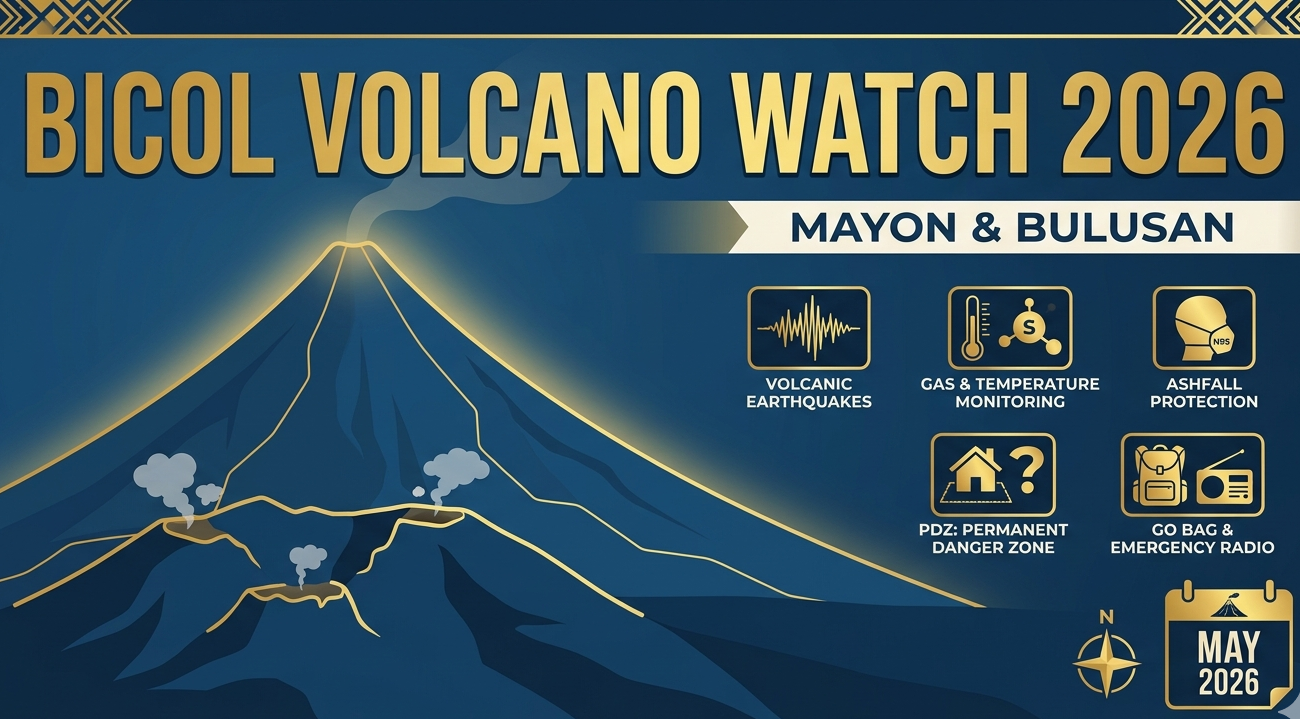
The Bicol region is world-renowned for its majestic volcanoes, but as of May 2026, these giants are under close scientific observation. With the shifting weather patterns and recent seismic readings, PHIVOLCS has issued updated advisories for Mount Mayon and Mount Bulusan to ensure the safety of residents and travelers alike.
Here is the latest update on volcanic activity in Bicol and what you need to know to stay prepared.
1. Mount Mayon: Persistent “Restlessness”
Mount Mayon in Albay remains under Alert Level 1 (Abnormal). While there is no immediate threat of a major eruption in the coming days, the volcano continues to exhibit signs of low-level unrest:
- Degassing and Sulfur Dioxide: Recent measurements show sulfur dioxide ($SO_2$) emissions averaging over 500 tonnes per day. This indicates that magma is moving or reacting deep beneath the structure.
- Faint Crater Glow: A faint “banaag” or crater glow remains visible at night through telescope observations, signifying the presence of hot volcanic gases or remnant lava at the summit.
- Ground Deformation: Electronic tilt and GPS monitoring indicate that the volcano’s edifice remains slightly inflated, a trend that has persisted since last year.
Critical Safety Reminder: Entry into the 6-kilometer Permanent Danger Zone (PDZ) is strictly prohibited. The risks of sudden phreatic (steam-driven) eruptions, rockfalls, and landslides remain high.
2. Mount Bulusan: Monitoring Phreatic Potential
In Sorsogon, Mount Bulusan is also being closely monitored under Alert Level 1. Its activity is characterized by hydrothermal pressures:
- Volcanic Earthquakes: The seismic network has recorded a series of weak volcanic tremors over the past 24 hours, suggesting hydrothermal activity beneath the vents.
- Steam-Driven Risks: With the arrival of the 2026 Rainy Season, there is an increased risk of rainwater interacting with hot rocks, which could trigger sudden phreatic eruptions or ash puffs without warning.
3. The “Lahar” Threat This Rainy Season
As the Philippines transitions into the rainy season this May, the primary hazard for communities surrounding Mayon and Bulusan shifts from fire to Lahar (volcanic mudflows).
- Debris Accumulation: Years of accumulated ash and pyroclastic deposits sit on the slopes. Heavy rainfall can easily mobilize this debris, sending it rushing down river channels.
- High-Risk Areas: Municipalities such as Guinobatan, Camalig, and Daraga in Albay must remain vigilant during intense or prolonged rainfall, as these are traditional paths for lahar flows.
4. How to Stay Ready (Emergency Checklist)
For Bicolanos and tourists in the area, here is your 2026 Volcano Readiness Kit:
- N95 Face Masks: Maintain a fresh supply of masks. Ashfall can cause severe respiratory irritation and should not be inhaled.
- Digital Hazard Tools: Use the HazardHunterPH app to check if your specific location or hotel is within a known Lahar or pyroclastic flow hazard zone.
- Battery-Powered Radio: In the event of a power outage or loss of internet, local radio stations remain the most reliable source of emergency government broadcasts.
- Protect Your Water: Ensure all drinking water containers are tightly sealed to prevent contamination from fine volcanic ash or chemicals.
A Message of Safety and Vigilance
Living with the beauty of Mayon and Bulusan is a part of life in Bicol. Our safety depends not on fear, but on accurate information and swift cooperation with local authorities.
Stay tuned to official updates from your local PDRRMO (Provincial Disaster Risk Reduction and Management Office) and avoid sharing unverified “viral” reports on social media that may cause unnecessary panic.
Leave a Reply